Electrical work does not forgive hesitation. A switchboard incident can move from routine task to life-threatening emergency in seconds, especially when a worker is still in contact with a live low voltage panel and the people nearby are unsure what they can safely do. That is why CPR LVR training sits in a very practical space. It is not just another compliance certificate for the file. It is a hands-on course built around the moment when someone must make safe decisions under pressure, perform a low voltage rescue, and start CPR if the casualty is not breathing normally.
For workplace safety officers, builders, construction workers, electricians, mining professionals and energy personnel, this training has a direct connection to the environments they manage or work within. Plant rooms, temporary construction supplies, switchboards, solar and energy infrastructure, fit-out sites, workshops, warehouses and mining support facilities all bring people into contact with electrical risk. Even where a person is not carrying out electrical work themselves, they may be responsible for site safety, contractor coordination, emergency response planning or first response.
The current nationally recognised low voltage rescue unit is UETDRMP018, “Perform rescue from a live low voltage panel”. It supersedes and is equivalent to UETDRMP007, and it has also replaced the older wording often associated with UETDRRF004 and UETDRMP007. When paired with HLTAID009 Provide cardiopulmonary resuscitation, the combined training is commonly referred to as CPR LVR, LVR CPR, a CPR LVR course, or low voltage rescue training with CPR.

First Aid Pro’s CPR LVR course combines UETDRMP018 with HLTAID009 Provide CPR in a face-to-face format, with no online pre-learning. The public course duration is listed as 4 hours. Certificates are issued same day and are valid for 12 months, with regular or annual refreshers recommended. Those details matter to busy sites because training that is concise, practical and current is much easier to schedule around rosters, shutdowns and project deadlines.
Why low voltage rescue training deserves serious attention
The phrase “low voltage” can sound reassuring to people outside the electrical trade, but in a rescue situation it should never be treated casually. Low voltage can still kill. The immediate problem for a rescuer is not only the injured worker. It is also the possibility that the rescuer becomes the second casualty.
I have seen safety conversations on building sites drift toward paperwork because paperwork is visible. Permits are signed, inductions are recorded, and inspection checklists are filed. Those things matter, but electrical incidents test something different. They test whether people can recognise danger, control the scene, avoid contact with live parts, and act in a sequence that gives the casualty the best chance without putting others at risk.
That is where low voltage rescue training earns its place. It gives workers a structured way to think through the rescue, rather than relying on instinct. Instinct can be dangerous around electricity. A colleague collapses at a panel and the natural human response is to grab them. Training interrupts that reflex. It teaches rescuers to consider isolation, safe approach and safe removal before moving into care. Once the casualty is clear and it is safe, CPR skills become critical.
The CPR component is not theoretical. HLTAID009 assessment evidence includes at least 2 minutes of uninterrupted CPR on an adult manikin placed on the floor. That practical detail is worth noting. Learners need to be physically able to perform CPR on the floor because that is how CPR is commonly delivered in a real emergency. A boardroom discussion cannot substitute for kneeling beside a manikin, managing fatigue, keeping rhythm and depth, and continuing through the discomfort that starts surprisingly quickly.
The people who benefit most from CPR LVR
CPR LVR is often associated with electricians, and rightly so, but limiting it to licensed electrical workers misses the reality of modern worksites. Electrical exposure can exist wherever construction, maintenance, energy supply or heavy industry is taking place. On many sites, the person closest to an incident may be a supervisor, safety officer, builder, mechanical tradesperson, labourer, plant operator or energy worker rather than the electrician assigned to the board.
First Aid Pro identifies the course as suitable for electricians, electrical workers, workplace safety officers, builders, construction workers, mining professionals and energy personnel. That range reflects what actually happens on the ground. A safety officer may be the first person called when someone reports a shock. A builder may be coordinating trades in a live refurbishment environment. A mining professional may work around substations, control panels or temporary electrical infrastructure. Energy personnel may operate in settings where electrical hazards are part of the daily risk profile.
For workplace safety officers, the value of CPR LVR training is partly operational and partly cultural. It strengthens emergency response capability, but it also gives the safety officer more credibility when discussing electrical controls with trades. A safety officer who understands the basics of low voltage rescue can ask better questions during toolbox talks and site reviews. They are more likely to notice when rescue equipment, access arrangements or response planning are treated as afterthoughts.
Builders and construction managers face a different challenge. They often coordinate overlapping trades under time pressure. Temporary power, switchboard access, fit-off work and energised areas can sit close to general construction activity. A builder does not need to become an electrician to benefit from LVR training. The benefit lies in recognising the seriousness of an electrical event, knowing the correct response pathway, and making sure trained people are available when high-risk electrical tasks are underway.
Energy personnel and mining professionals often work in environments where distance, shift patterns and site layout can complicate emergency response. A fast ambulance response may not be guaranteed. In those settings, trained first responders on site become especially important. A 4-hour CPR LVR course does not turn someone into a paramedic, and it should not be oversold as doing so. What it does is build immediate rescue and CPR competence for the first critical minutes.
What the combined CPR LVR course covers in practice
A combined CPR LVR course brings two skill sets together because the rescue and the casualty care are linked. UETDRMP018 focuses on performing rescue from a live low voltage panel. HLTAID009 focuses on providing cardiopulmonary resuscitation. In a real incident, those capabilities may be needed back to back. The casualty must be separated from danger safely, then assessed and treated.
The face-to-face format matters. Low voltage rescue is not something most people should learn by clicking through slides at home. The course requires physical movement, positioning, use of rescue principles and CPR practice. First Aid Pro delivers its CPR LVR course face to face with no online pre-learning, which suits the hands-on nature of the subject. Participants are in the room, practising rather than passively reading.
The public course duration is 4 hours. That is a practical length for working people. It is long enough to focus attention and complete practical assessment, but short enough to fit into a morning, afternoon or planned training block. For businesses, that can make the difference between training being postponed indefinitely and training actually happening.
The same-day certificate issue also has practical value. On construction and energy projects, workers often need evidence of current training before starting particular tasks or attending certain sites. Waiting days for paperwork can create friction. Same-day certificates reduce that delay, provided the participant has successfully completed the course requirements.
The 12-month validity period is also worth treating seriously. Skills like CPR fade when they are not used. Even confident workers become rusty on hand placement, compression rhythm, depth, scene management and rescue sequence if they only refresh every few years. Annual refreshers are not just an administrative habit. They keep physical confidence closer to the surface.
What participants should expect on the day
A CPR LVR course is not usually a passive classroom experience. Participants should expect to move, kneel, practise and demonstrate competence. The CPR assessment requirement includes at least 2 minutes of uninterrupted CPR on an adult manikin placed on the floor, so anyone attending should be prepared for that physical component.
That can catch people by surprise. Two minutes does not sound long until you are compressing properly. Shoulders tire, knees complain, and the temptation to slow down creeps in. That is one reason the floor-based assessment is useful. It exposes the physical reality of CPR in a controlled training environment. Better to discover the effort involved during training than during an emergency.
The LVR component also benefits from direct practice. A person who has only read about low voltage rescue may understand the theory but still freeze when faced with a scenario. Training builds a mental pathway. Stop. Assess. Do not rush in. Make the scene safe. Follow the rescue process. Move to casualty care once the danger is controlled. Those habits are formed through repetition and correction, not through slogans.
For supervisors sending staff to training, it helps to brief participants properly beforehand. They should wear suitable clothing for practical activity, arrive ready to participate, and understand that the course involves assessment. If someone has a physical limitation that may affect CPR on the floor, that should be considered before booking, because the assessment requirement is specific.
Choosing between public courses and onsite workplace training
Public CPR LVR courses suit individuals and small numbers of staff who need training quickly. First Aid Pro lists public venues including Level 8/117 Queen Street in Brisbane, Unit 9/84 Wembley Road in Logan Central, Level 15, Suite 1501/370 Pitt Street in Sydney, Level 2, 50 King William Street in Adelaide, and 393 Argyle Street in North Hobart at Rydges Hobart, with access via 15 Lewis Street. For workers based near those locations, public sessions can be the simplest option.
Onsite workplace CPR/LVR training becomes attractive when a business has several people to train. First Aid Pro can deliver onsite workplace CPR/LVR training for groups of 5 to 24 participants and offers flexible scheduling. Its corporate training information also refers to workplace and group delivery Australia-wide. For project teams, maintenance crews or safety departments, onsite delivery reduces travel time and keeps the training closer to the real work environment.
There are trade-offs. Public sessions may offer convenient dates and a straightforward per-person booking process. Onsite training can be more efficient for groups and may be easier to schedule around shifts, but it requires the workplace to coordinate attendance and provide suitable space. The better choice depends on how many people need training, where they are located, and how urgently certificates are required.
A simple decision framework helps:
Choose a public CPR LVR course when one or two workers need training promptly and can travel to a listed venue. Choose onsite training when 5 to 24 participants can be trained together with less disruption than sending them off site. Use flexible scheduling for crews that work shifts, shutdowns or project windows where standard course times are difficult. Prioritise same-day certificate issue when site access or project mobilisation depends on current evidence of training. Plan annual refreshers before certificates expire, rather than waiting until a worker is refused access or stood down from a task.That list is deliberately practical. Training decisions often fail because they become too abstract. The real questions are simple. Who needs the qualification? When do they need it? Can they physically complete the CPR component? Which delivery option causes the least disruption while still meeting the training need?
Current units and older terminology
One source of confusion in CPR LVR training is the language used across sites, job ads and contractor documents. People may still refer to older unit codes or old course names. UETDRMP018 is the current nationally recognised unit, “Perform rescue from a live low voltage panel”. It supersedes and is equivalent to UETDRMP007. First Aid Pro also describes UETDRMP018 as replacing older UETDRRF004 and UETDRMP007 wording.
This matters because a worker might say they need “LVR”, “low voltage rescue”, “LVR CPR”, “CPR LVR”, “low voltage rescue course” or “low voltage rescue training”, and they may all be pointing toward the same broad training requirement. The safest approach is to check the actual units included. For the First Aid Pro CPR LVR course, the combination is UETDRMP018 plus HLTAID009 Provide CPR.
For safety officers and administrators, unit clarity prevents avoidable problems. A site requirement may ask for current CPR and LVR. If a worker presents a certificate with outdated wording, someone may need to confirm whether it aligns with the current unit requirement. Since UETDRMP018 supersedes and is equivalent to UETDRMP007, understanding the transition helps reduce confusion, especially with workers who completed previous versions and are now refreshing.
That said, current training is still important. A certificate that was suitable years ago does not solve today’s currency requirement. First Aid Pro states its CPR LVR certificates are valid for 12 months and recommends regular or annual refreshers. From a workplace safety perspective, currency should be treated as part of readiness, not just record keeping.
The safety officer’s role before and after training
A workplace safety officer often becomes the link between training and actual emergency readiness. Sending people to an LVR course is a good start, but the benefit is stronger when cpr lvr course australia the workplace integrates that training into its systems. That does not mean creating a thick binder that nobody opens. It means making sure trained people, emergency information, access arrangements and rescue expectations line up with the work being done.
Before training, the safety officer should identify who is most likely to be near electrical risk. That includes licensed electrical workers, but also supervisors, builders, maintenance personnel, energy staff and workers on projects where temporary power or live electrical infrastructure is present. The aim is not to train randomly. It is to place capability where it is most likely to be needed.
After training, the safety officer should keep the conversation alive. People forget details when training is treated as a one-off event. Short reminders during toolbox talks can reinforce the key judgement point: do not become the second casualty. Emergency response drills, even brief ones, can expose practical issues such as blocked access, uncertainty over who calls emergency services, or confusion about where rescue equipment is kept.
Records matter too, but not for their own sake. A training register should help the business see who is current, who is due for refresher training, and whether gaps exist on particular shifts or sites. The 12-month validity period makes this manageable if someone owns the calendar. If nobody owns it, certificates expire quietly.
Builders and site managers: where the risk hides in plain sight
Builders and site managers often work with electrical risk indirectly. They may not open a live panel, but they control the pace and sequencing of work around people who do. Refurbishment projects are a common example. A building may remain partly occupied while trades work around existing services. Temporary supplies may be installed. Switchboards may be accessed repeatedly. Pressure builds because every trade is waiting on another trade.
In that environment, CPR LVR training gives site leaders a better appreciation of what an electrical incident demands. It also helps them respect exclusion, isolation and access controls. A builder who understands low voltage rescue is less likely to dismiss electrical controls as trade fussiness. They can see that a few minutes saved by rushing work around live equipment can create far greater consequences.
The practical benefit is also immediate. If an incident occurs, a trained site manager can help control the scene, direct others away from danger, call for help and support the rescue response. They may not be the person performing every action, but they are less likely to freeze or give unsafe instructions. On a busy site, that matters.
Anecdotally, the strongest construction teams I have worked around were not the ones with the loudest safety slogans. They were the ones where supervisors could pause a job without drama, ask whether the right trained people were present, and make a decision before the risk became urgent. CPR LVR training supports that kind of judgement.
Energy and mining environments need currency, not complacency
Energy and mining workforces tend to understand high-risk environments better than most, but familiarity brings its own danger. Workers who spend years around electrical infrastructure can become comfortable with the presence of hazards. Comfort is useful when it comes from competence. It is dangerous when it dulls attention.
For energy personnel and mining professionals, annual CPR LVR refreshers make sense because the emergency is rare but severe. Most trained workers will never perform a low voltage rescue, and that is a good thing. The problem is that unused skills decay. A person may remember the broad idea while losing the fine detail and physical confidence needed under pressure.
Remote or complex sites add another layer. A response may need to begin before external medical support arrives. Internal coordination may involve radios, site access points, shift supervisors and emergency response teams. CPR LVR training is not a complete emergency management system, but it gives individuals a vital piece of that system. It prepares them for the first response, when minutes feel short and mistakes are costly.
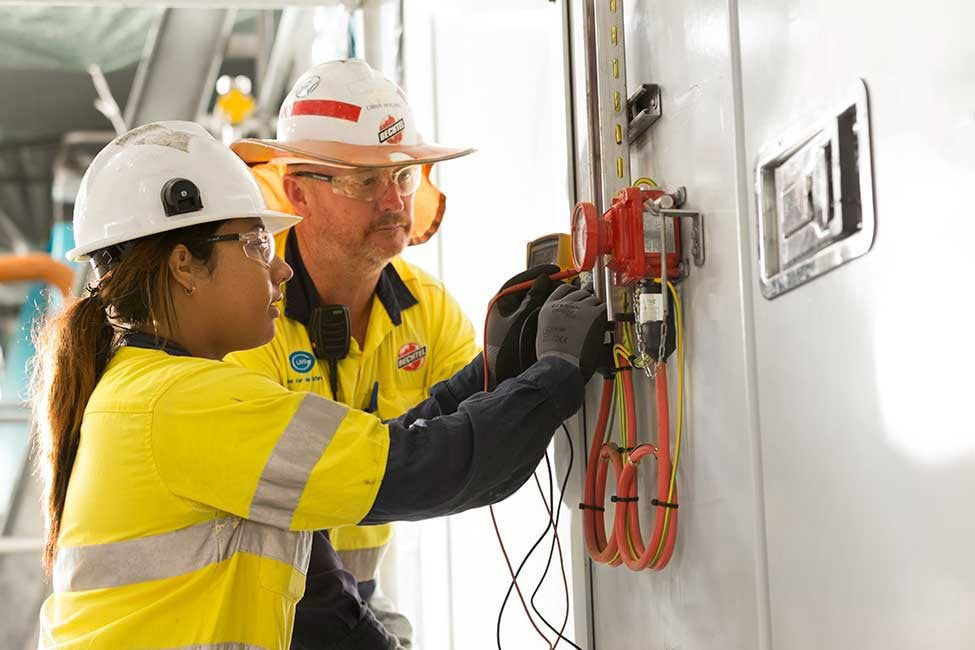
For managers, the training plan should reflect roster patterns. It is not enough for the day shift to have trained people if work involving electrical exposure occurs on other shifts. A training matrix should show coverage across crews, not just total headcount. That is a common weak point in otherwise well-managed businesses.
Price, duration and scheduling realities
First Aid Pro’s public CPR LVR course is shown at $99, with some pages showing limited-time discount pricing on selected dates. For many individuals and businesses, the price point makes annual refresher planning easier. The larger cost is often not the course fee but the time away from productive work. That is why the 4-hour duration and same-day certificate issue are relevant. They reduce friction.
Still, scheduling should be handled with care. Workers should not be sent to training exhausted after night shift if they are expected to perform CPR assessment properly. Nor should a business book a group session and then pull participants out halfway through for urgent site calls. The course is short, but it still deserves full attention.
For group training, the 5 to 24 participant range gives businesses room to plan. A small contractor may gather a handful of workers. A larger organisation may train a crew or department in one session. Flexible scheduling can help align training with project demands, but the business still needs to protect the time. A rushed course culture undermines the very readiness the training is meant to build.
A practical readiness check for workplaces
Training is most useful when it connects to workplace preparation. A current CPR LVR certificate is important, but it should sit inside a broader pattern of readiness. The following check is short enough to use before electrical work programs, shutdowns or project mobilisation:
Confirm which workers hold current CPR LVR training and whether certificates are within the 12-month validity period. Check that trained people are rostered when electrical risk is present, including early starts, late shifts and weekend work. Make sure workers know how to raise the alarm and who takes control of the scene during an electrical incident. Keep access to electrical areas clear so emergency response is not delayed by stored materials, locked routes or congestion. Book refreshers before expiry dates, especially for workers who need uninterrupted site access.This is not a substitute for a full safety management system, but it catches several common failures. The trained person is absent. The certificate expired. The access path is blocked. Nobody knows who calls for help. These are ordinary problems, not exotic ones, and ordinary problems are often what make emergencies worse.
Why face-to-face CPR LVR still matters
Online learning has a place in many forms of workplace training, but CPR LVR is not well served by theory alone. The skills are physical, sequential and pressure-sensitive. A person must practise enough to understand body position, rescuer safety, casualty movement and CPR effort. They also need an instructor to observe and correct technique.
First Aid Pro’s CPR LVR training is delivered face to face with no online pre-learning. For this subject, that is a strength. It means the session is concentrated, practical and supervised. Participants are not arriving with a half-remembered online module completed weeks earlier. They are learning and demonstrating the skills in the training environment.
The professional value is not only in passing assessment. It is in leaving with a clearer sense of what the emergency would feel like. The floor-based CPR component, the focus on low voltage rescue, and the compressed 4-hour timeframe all point toward practical competence. Good training does not make people fearless. It makes them appropriately cautious and more useful when something goes wrong.
Bringing CPR LVR into workplace safety culture
The best use of CPR LVR https://eduardoxdso106.fotosdefrases.com/cpr-lvr-assessment-demands-cpr-on-the-flooring-as-well-as-low-voltage-rescue-capabilities training is neither box-ticking nor overstatement. It should not be treated as magic protection against electrical incidents. Prevention remains the priority. Safe systems of work, competent electrical workers, isolation practices, supervision and planning all sit ahead of rescue. Nobody should use the presence of trained rescuers as a reason to tolerate poor controls.
At the same time, rescue readiness is essential because controls can fail, conditions can change, and people can make mistakes. CPR LVR training gives workers a disciplined response to a narrow but serious emergency. It combines low voltage rescue with CPR because an electrical incident can require both. It suits the people who work closest to electrical risk and the people responsible for managing that risk across a site.
For workplace safety officers, it strengthens emergency planning and practical credibility. For builders and construction workers, it supports safer coordination around live or potentially live electrical environments. For energy personnel and mining professionals, it keeps rare but critical skills current. For electrical workers, it aligns directly with the hazards of the trade.
A 4-hour CPR LVR course, delivered face to face, with same-day certification and a 12-month validity period, is a manageable investment in readiness. The real measure of its value is not the certificate sitting in a folder. It is the trained worker who pauses before rushing in, makes the scene safer, performs the rescue properly, and starts CPR when the casualty needs it. That is the difference training is meant to make.